
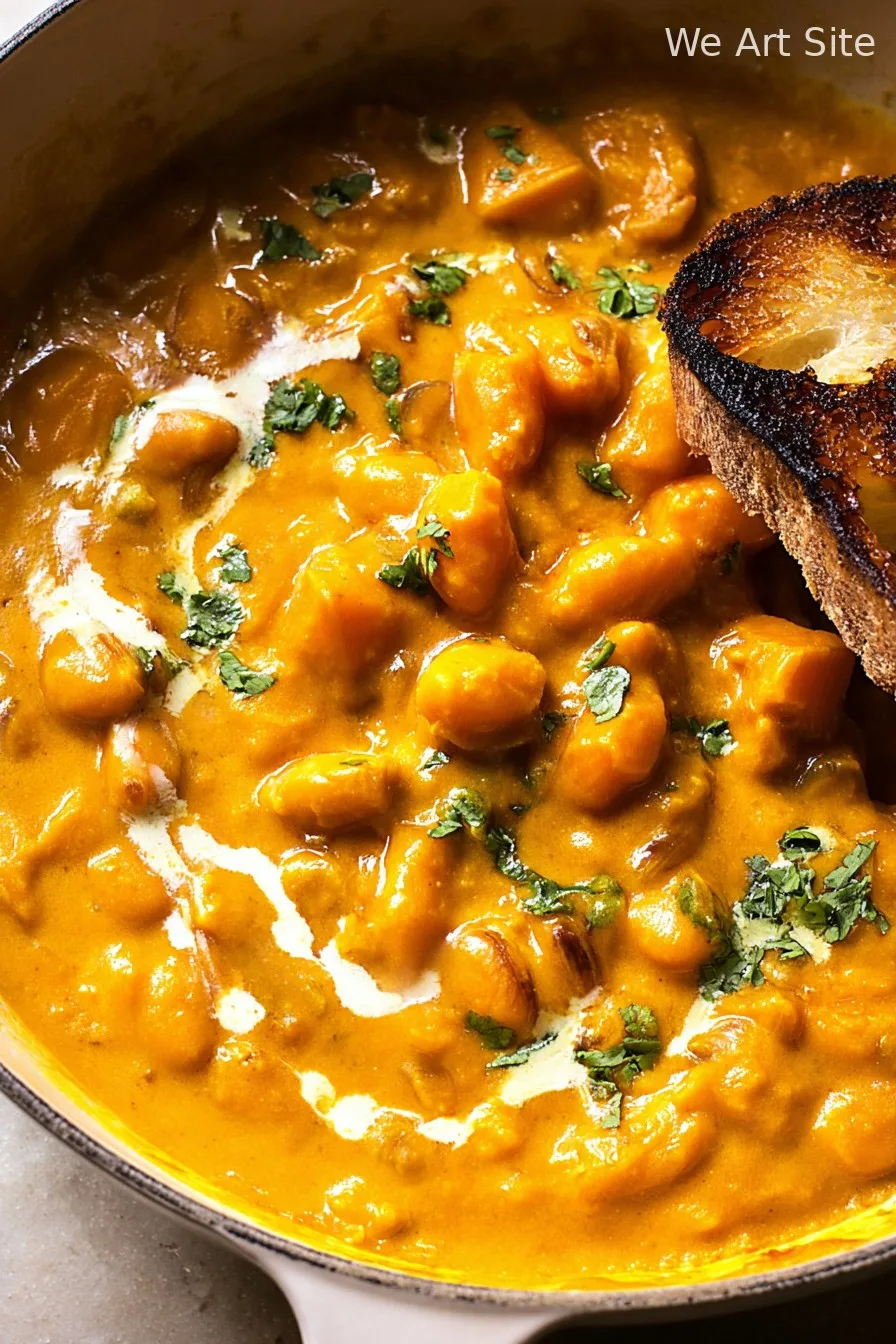
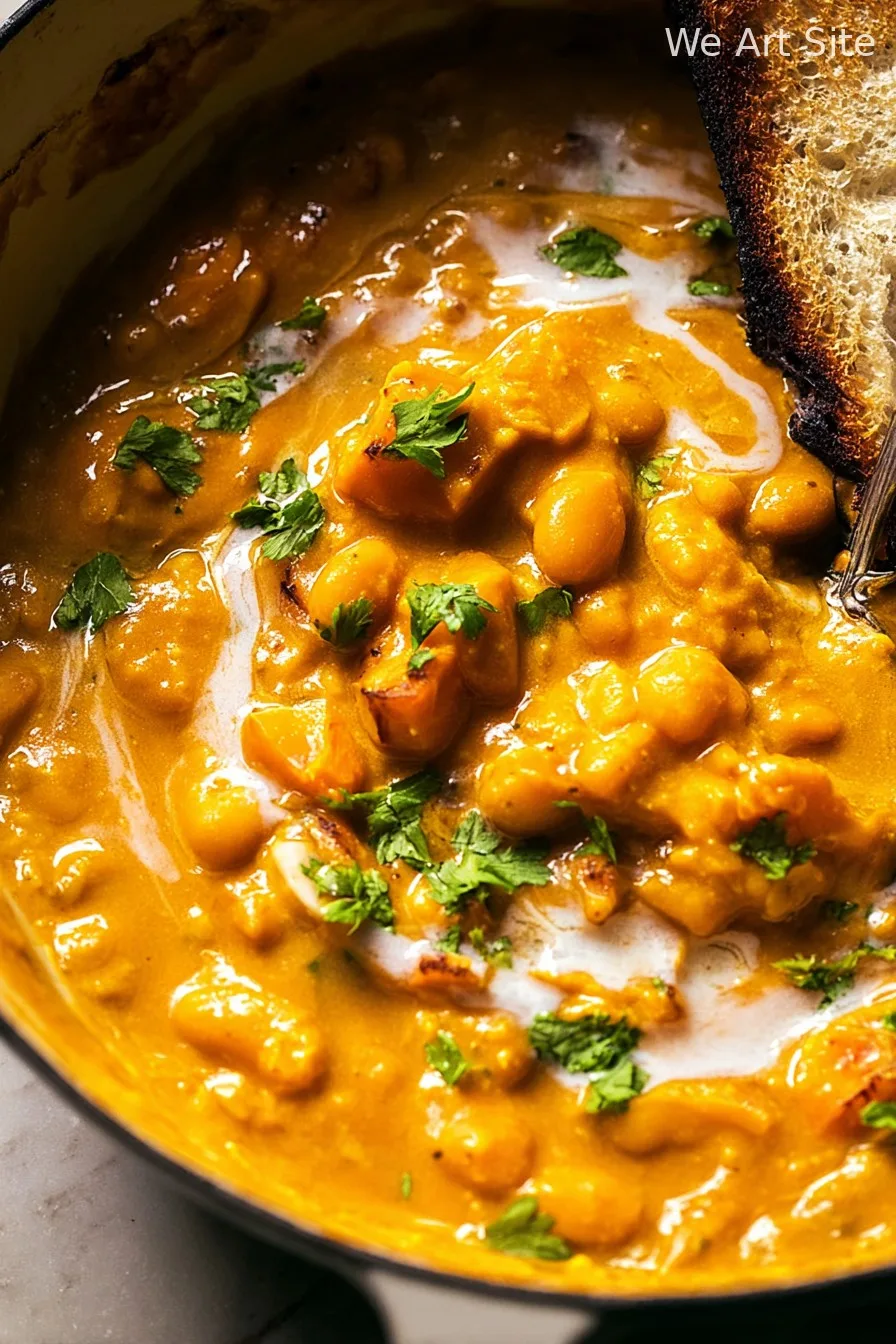
Hey y’all! If you’re searching for a cozy, hearty, and absolutely delicious meal that comes together with minimal fuss, you’re going to love this Butternut Squash Butter Bean Curry. Creamy butter beans and naturally sweet roasted Butternut Squash simmer together in a fragrant coconut curry sauce that’s perfect for chilly evenings, healthy weeknights, and impressing dinner guests. It’s vegan, full of flavor, and makes for excellent leftovers. Let’s get cooking!
Why You’ll Love This
- Hearty and satisfying—a vegan curry that keeps you full and happy.
- Nutritious and packed with plant-based protein and fiber from butter beans and squash.
- Ready in just about 45 minutes (with only 15 minutes of prep time).
- Customizable and great for using up pantry staples.
- Makes for amazing leftovers and easy meal prep.
Ingredients
- 1 medium Butternut Squash (about 2 lbs), peeled and cubed
- 2 tbsp olive oil, divided
- 1 large yellow onion, diced
- 3 garlic cloves, minced
- 1 tbsp fresh ginger, grated
- 1 tbsp curry powder
- 1 tsp ground cumin
- 1/2 tsp smoked paprika
- 1/2 tsp ground cinnamon
- 1/4 tsp red chili flakes (optional, for heat)
- 1 (14-oz) can diced tomatoes
- 2 (14-oz) cans butter beans, drained and rinsed
- 1 (14-oz) can coconut milk (full-fat for creaminess)
- 1 cup vegetable broth
- 1 1/4 tsp salt (more to taste)
- 1/2 tsp black pepper
- 1 tbsp lemon juice
- Fresh cilantro, chopped, for garnish
Directions
Step 1: Roast the Butternut Squash
- Preheat oven to 400°F (205°C).
- Toss the cubed Butternut Squash with 1 tbsp olive oil, 1/2 tsp salt, and a crack of black pepper.
- Spread on a parchment-lined baking sheet and roast for 20-25 minutes, until golden and fork-tender.
Step 2: Build Flavors in the Pot
- While squash is roasting, heat the remaining 1 tbsp olive oil in a large Dutch oven or deep skillet over medium heat.
- Add the diced onion, ginger, and garlic. Cook for 4-5 minutes, until softened and fragrant.
- Stir in curry powder, cumin, smoked paprika, cinnamon, and chili flakes. Sauté for 1 minute to bloom the spices.
Step 3: Simmer the Curry
- Add diced tomatoes, coconut milk, and vegetable broth to the pot. Stir well to combine.
- Add the drained butter beans, 3/4 tsp salt, and black pepper.
- Bring to a gentle simmer, cover, and let cook for 10 minutes, stirring occasionally.
Step 4: Finish and Serve
- Add your roasted butternut squash to the curry. Simmer uncovered for 5 more minutes to meld the flavors.
- Add lemon juice, taste, and adjust salt if needed.
- Serve hot, garnished with fresh cilantro and a squeeze of lemon.
Notes
- Peeling butternut squash can be tricky—use a sharp vegetable peeler for best results.
- For a thicker curry, simmer uncovered for a few extra minutes at the end.
- Taste and tweak spices to match your own heat and flavor preferences.
Variations
- Chickpea Swap: Substitute butter beans with chickpeas for a similar creamy texture and protein punch.
- Leafy Greens: Stir in two big handfuls of baby spinach or kale during the last 2 minutes of cooking.
- Spicy Kick: Add 1 diced jalapeño or a spoonful of chili paste with your onions for extra heat.
Required Equipment
- Large Dutch oven or deep skillet
- Baking sheet and parchment paper
- Sharp chef’s knife and cutting board
- Vegetable peeler
- Wooden spoon for stirring
Storage Instructions
- Let the curry cool to room temperature before transferring to airtight containers.
- Store in the refrigerator for up to 4 days.
- For longer storage, freeze for up to 2 months—defrost in the fridge overnight before reheating.
- Reheat gently on the stovetop over medium heat until hot, adding a splash of broth if it thickens too much.
Suggested Pairings & Serving Recommendations
- Serve with steamed basmati rice or fluffy quinoa to soak up the savory sauce.
- Pair with warm naan or roti for the ultimate comfort meal.
- Top with plain coconut yogurt or a lime wedge for a tangy finish.
Pro Tips
- Dice the butternut squash into even-sized pieces for uniform roasting and texture.
- Let the curry rest for 10 minutes off heat before serving—the flavors deepen as it sits.
- Garnish generously with fresh cilantro and a drizzle of coconut milk for that restaurant-style look.
FAQ
- Can I use frozen butternut squash?
- Absolutely! Frozen squash is convenient—just roast a few extra minutes if needed, or add straight to the curry and simmer until tender.
- Is this curry spicy?
- This recipe is mild, but you can amp up the heat with extra chili flakes or fresh chili peppers.
- Can I make this recipe oil-free?
- Yes, simply sauté onions and spices in a splash of veggie broth instead of oil and skip oil for roasting the squash (just use parchment to prevent sticking).
- Prep time: 15 minutes
- Cook time: 30 minutes
- Total time: 45 minutes
Ingredients
- 1 medium butternut squash (about 900g), peeled and cubed
- 2 cans (400g each) butter beans, drained and rinsed
- 1 large onion, finely chopped
- 3 cloves garlic, minced
- 1-inch piece fresh ginger, grated
- 1 can (400g) chopped tomatoes
- 1 can (400ml) coconut milk
- 2 tablespoons curry powder
- 1 teaspoon ground cumin
- 1 teaspoon ground coriander
- 1 teaspoon turmeric
- 2 tablespoons vegetable oil
- Salt and black pepper to taste
- Fresh cilantro, chopped, for garnish
Instructions
-
1Heat the vegetable oil in a large pot over medium heat. Add chopped onion and sauté for 5 minutes until softened.
-
2Add the minced garlic and grated ginger, cook for 1 minute until fragrant.
-
3Stir in the curry powder, cumin, coriander, and turmeric. Cook for 1 minute, stirring constantly.
-
4Add the cubed butternut squash, chopped tomatoes, and coconut milk. Bring to a simmer and cook for 20 minutes, or until the squash is tender.
-
5Stir in the drained butter beans and simmer for another 8-10 minutes. Season with salt and black pepper to taste.
-
6Garnish with fresh cilantro before serving. Serve hot with rice or naan.
CLICK FOR NUTRITION INFO
↑
Approximate Information for One Serving
Serving Size:
1 serving
Calories:
420cal
Protein:
14 gg
Fat:
16 gg
Saturated Fat:
0g
Trans Fat:
0g
Cholesterol:
0mg
Sodium:
0mg
Potassium:
0mg
Total Carbs:
60 gg
Fiber:
0g
Sugar:
0g
Net Carbs:
0g
Vitamin A:
0
Vitamin C:
0mg
Calcium:
0mg
Iron:
0mg
Nutrition Disclaimers
Number of total servings shown is approximate. Actual number of servings will depend on your preferred portion sizes.
Nutritional values shown are general guidelines and reflect information for 1 serving using the ingredients listed, not including any optional ingredients. Actual macros may vary slightly depending on specific brands and types of ingredients used.
To determine the weight of one serving, prepare the recipe as instructed. Weigh the finished recipe, then divide the weight of the finished recipe (not including the weight of the container the food is in) by the desired number of servings. Result will be the weight of one serving.
Did you make this recipe?
Please consider Pinning it!!