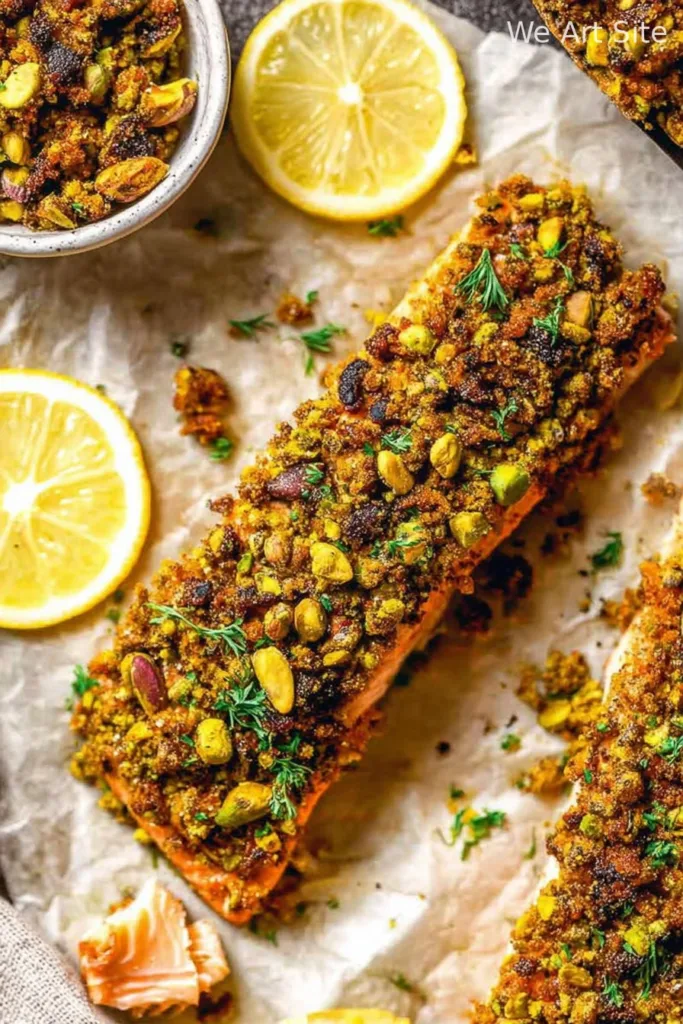
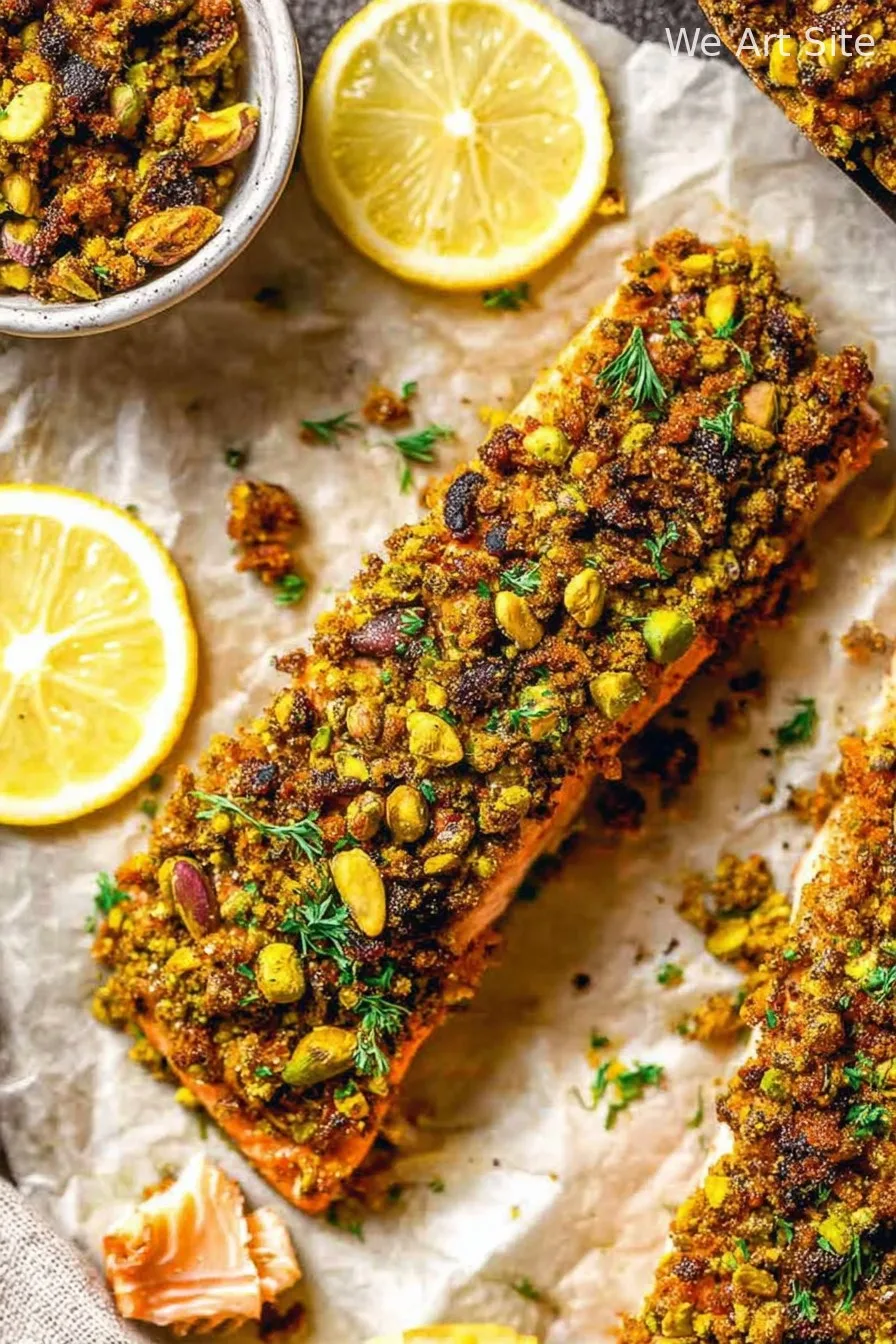
Hey y’all! Looking for a dinner that’s equal parts impressive and easy to make? This Pistachio-Crusted Salmon delivers a wonderful crunch, bright flavors, and luscious texture—perfect for family dinners, date night, or even a quick weeknight meal. Juicy roasted salmon meets nutty pistachios and a lemony, honey-kissed glaze for a flavor bomb everyone will love. Let’s get cooking!
Why You’ll Love This
- Crispy, nutty topping pairs perfectly with tender, flaky salmon.
- Quick prep means you can have an elegant meal on the table in under 30 minutes.
- Lively lemon and honey glaze adds a delicious sweet-tangy contrast.
- Packed with protein and healthy fats for a nutritious dinner.
- Simple ingredients, but big, gourmet flavor!
Ingredients
- 2 salmon fillets (approximately 6 ounces (175 grams) each)
- Salt and pepper, to taste
- 1 clove garlic, minced
- 1 tablespoon olive oil
- 1/4 teaspoon Dijon mustard
- 2 tablespoons lemon juice, freshly squeezed
- 1 tablespoon honey
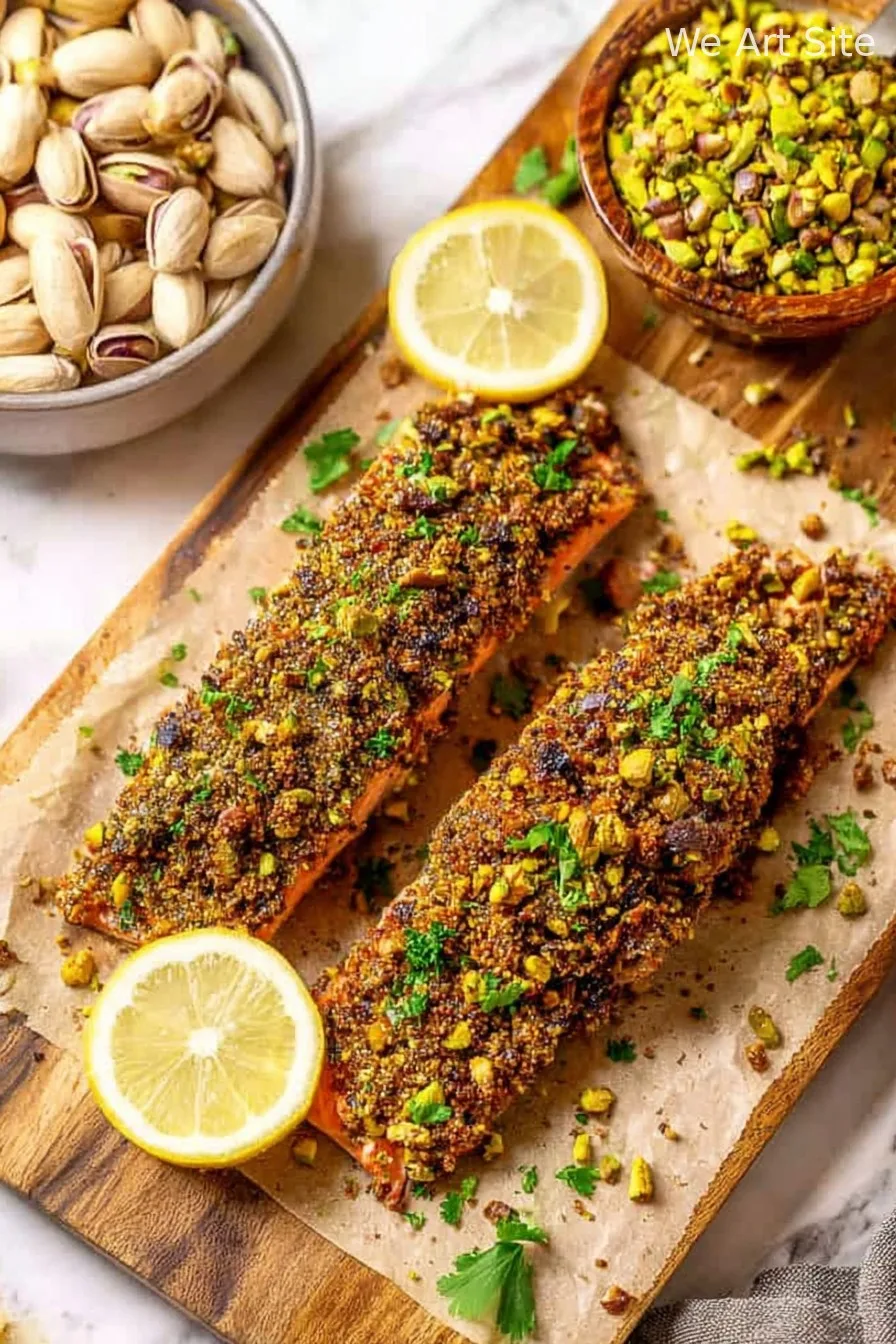
- 1/3 cup pistachios, coarsely chopped
Directions
- Preheat the Oven: Set your oven to 375°F (190°C) and allow it to fully preheat while you prep your salmon.
- Prep the Salmon: Give your salmon fillets a gentle rinse and pat them dry with paper towels. Lay them skin-side down on a lined baking sheet (parchment paper makes for easy cleanup). Sprinkle with salt and pepper on top to season generously.
- Make the Glaze: In a small bowl, stir together the minced garlic, olive oil, Dijon mustard, freshly squeezed lemon juice, and honey until smooth and thoroughly combined. Brush about three-quarters of this mixture over the top of each salmon fillet, making sure to coat the surface evenly for the best flavor.
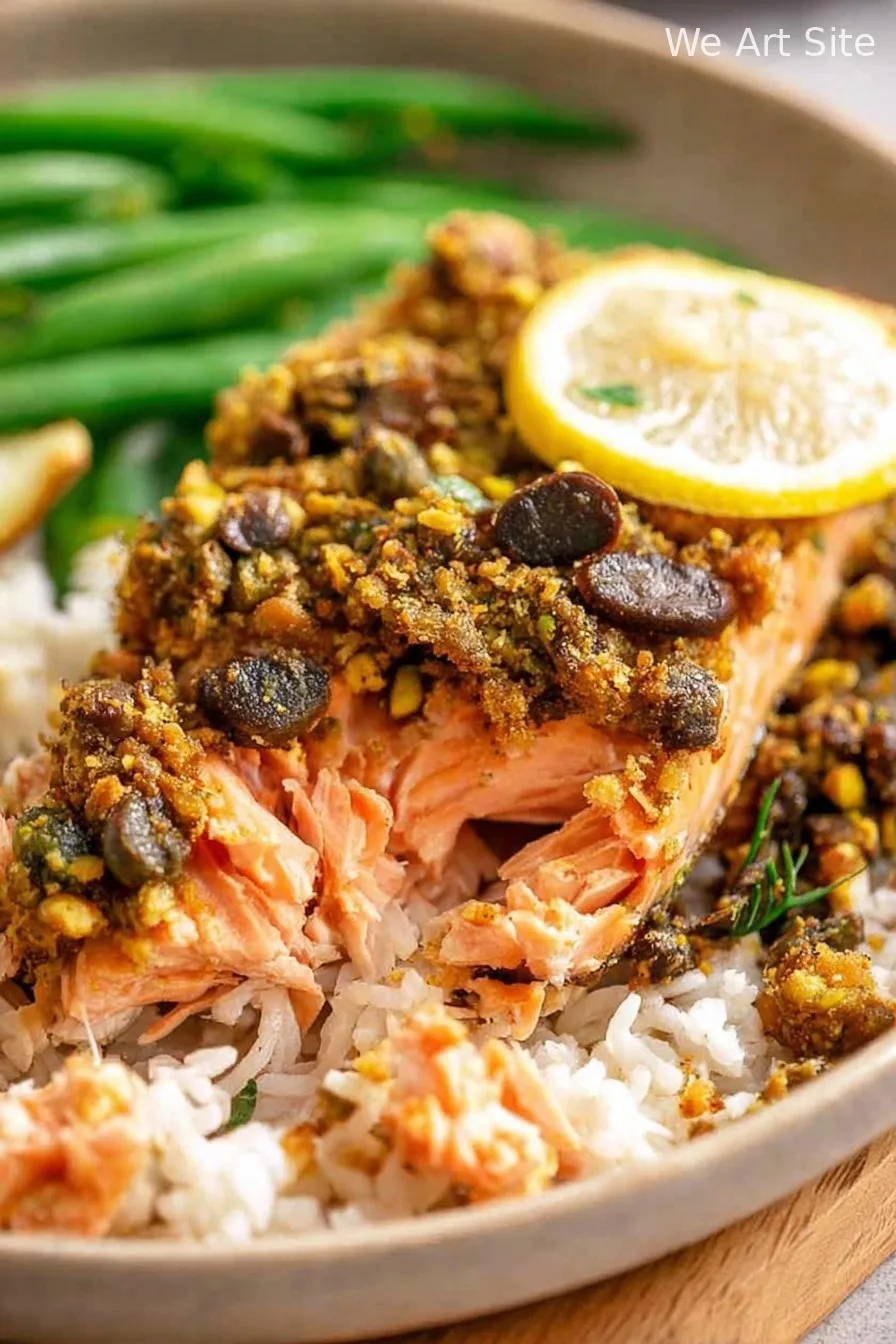
- Prepare the Pistachio Crust: Fold the chopped pistachios into the remaining glaze, then spoon this nutty mixture on top of the salmon fillets. Press it gently with the back of a spoon to help the pistachios adhere and form a crunchy coating.
- Bake: Place the sheet in your preheated oven and bake for 15-20 minutes, or until the salmon is opaque and flakes easily when tested with a fork. The pistachios should be golden and fragrant. Take the salmon out and let it rest for 5 minutes before serving to allow the juices to redistribute.
Notes
- For easier cleanup, always line your baking sheet with parchment paper.
- If your pistachios are salted, reduce or adjust the amount of added salt accordingly.
- Don’t overbake the salmon—check at 15 minutes, especially if your fillets are thin.
Variations
- Swap pistachios for walnuts or pecans for a different nutty profile.
- Add chopped fresh herbs like parsley or dill to the crust for extra freshness.
- For a spicy kick, stir a pinch of crushed red pepper flakes into the glaze.
Required Equipment
- Baking sheet lined with parchment paper
- Small mixing bowl
- Measuring spoons and cups
- Brush or spoon for glazing
- Chef’s knife for chopping nuts
Storage Instructions
- Leftover salmon can be stored in an airtight container in the refrigerator for up to 2 days.
- Reheat gently in the oven at 300°F (150°C) or enjoy cold atop salads.
Suggested Pairings & Serving Recommendations
- Serve with steamed asparagus, roasted baby potatoes, or a fresh green salad.
- A squeeze of extra lemon or a dollop of herbed yogurt complements the flavors beautifully.
- This salmon also makes a terrific topping for grain bowls or pasta dishes.
Pro Tips
- Lightly toast the pistachios beforehand to amplify their nutty flavor.
- If you prefer your salmon extra crispy, broil for the last 1-2 minutes—just keep a close eye to avoid burning!
- Use an instant-read thermometer for perfect doneness: 145°F (63°C) in the thickest part.
FAQ
Can I use frozen salmon fillets?
Absolutely—just be sure to thaw the fillets overnight in the fridge and pat them dry very well before proceeding.
Can I make this ahead of time?
You can assemble the salmon a few hours ahead (without baking); store covered in the refrigerator and bake just before serving.
What can I do with leftover pistachio-crusted salmon?
Leftovers are delicious flaked into salads, tucked inside wraps, or as a protein boost to grain bowls!
Prep & Cooking Times
- Prep time: 10 minutes
- Cook time: 15-20 minutes
- Total time: 25-30 minutes
Ingredients
- 2 salmon fillets (approximately 6 ounces (175 grams) each)
- Salt and pepper, to taste
- 1 clove garlic, minced
- 1 tablespoon olive oil
- 1/4 teaspoon Dijon mustard
- 2 tablespoons lemon juice, freshly squeezed
- 1 tablespoon honey
- 1/3 cup pistachios, coarsely chopped
Instructions
-
1Preheat the Oven: Set your oven to 375°F (190°C) and allow it to fully preheat while you prep your salmon.
-
2Prep the Salmon: Give your salmon fillets a gentle rinse and pat them dry with paper towels. Lay them skin-side down on a lined baking sheet (parchment paper makes for easy cleanup). Sprinkle with salt and pepper on top to season generously.
-
3Make the Glaze: In a small bowl, stir together the minced garlic, olive oil, Dijon mustard, freshly squeezed lemon juice, and honey until smooth and thoroughly combined. Brush about three-quarters of this mixture over the top of each salmon fillet, making sure to coat the surface evenly for the best flavor.
-
4Prepare the Pistachio Crust: Fold the chopped pistachios into the remaining glaze, then spoon this nutty mixture on top of the salmon fillets. Press it gently with the back of a spoon to help the pistachios adhere and form a crunchy coating.
-
5Bake: Place the sheet in your preheated oven and bake for 15-20 minutes, or until the salmon is opaque and flakes easily when tested with a fork. The pistachios should be golden and fragrant. Take the salmon out and let it rest for 5 minutes before serving to allow the juices to redistribute.
CLICK FOR NUTRITION INFO
↑
Approximate Information for One Serving
Serving Size:
1 serving
Calories:
420 caloriescal
Protein:
41gg
Fat:
24gg
Saturated Fat:
0g
Trans Fat:
0g
Cholesterol:
0mg
Sodium:
0mg
Potassium:
0mg
Total Carbs:
12gg
Fiber:
0g
Sugar:
0g
Net Carbs:
0g
Vitamin A:
0
Vitamin C:
0mg
Calcium:
0mg
Iron:
0mg
Nutrition Disclaimers
Number of total servings shown is approximate. Actual number of servings will depend on your preferred portion sizes.
Nutritional values shown are general guidelines and reflect information for 1 serving using the ingredients listed, not including any optional ingredients. Actual macros may vary slightly depending on specific brands and types of ingredients used.
To determine the weight of one serving, prepare the recipe as instructed. Weigh the finished recipe, then divide the weight of the finished recipe (not including the weight of the container the food is in) by the desired number of servings. Result will be the weight of one serving.
Did you make this recipe?
Please consider Pinning it!